The funnel that files the Meta and Google sale
ElasticFunnels is the pick if the landing page, the checkout and the network postback have to live on one record.
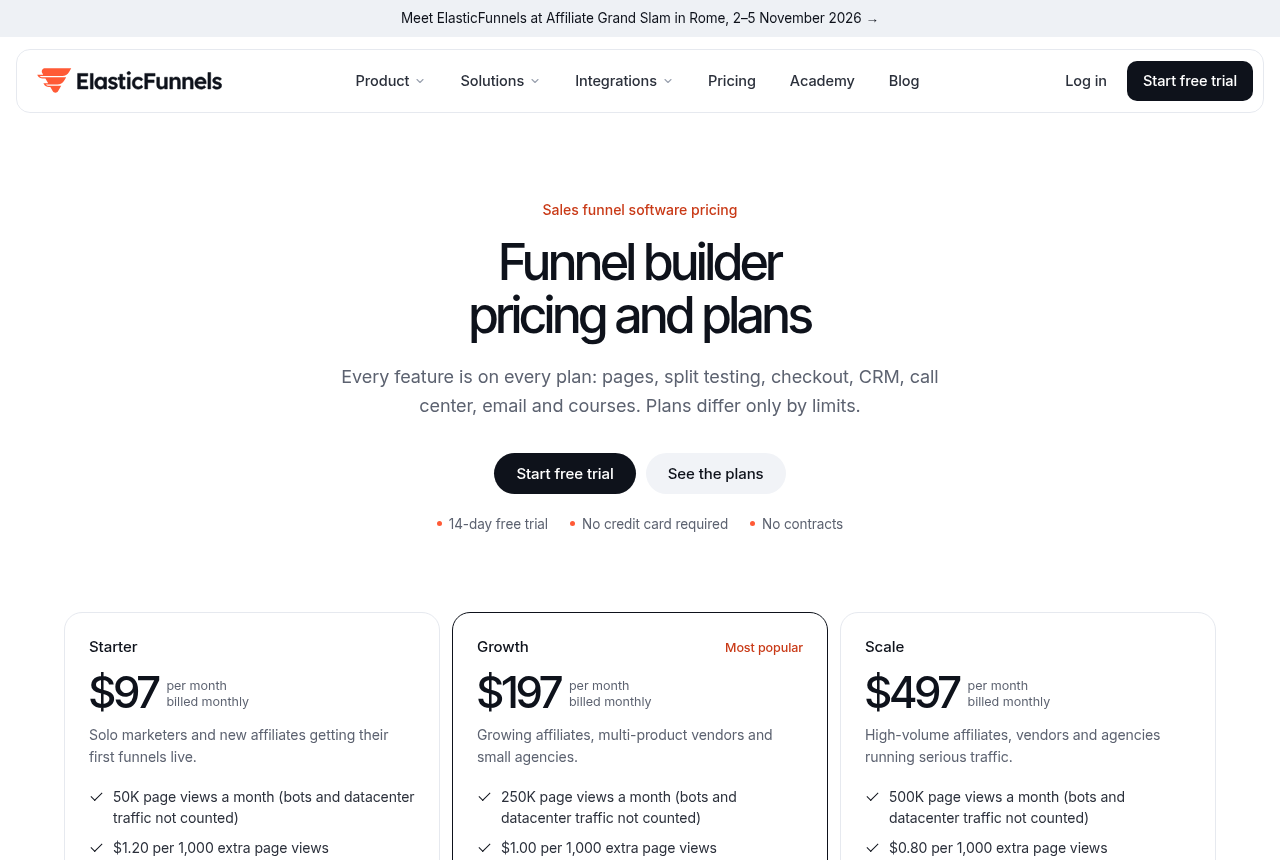
ElasticFunnels is a funnel platform for teams that run paid traffic. Pages, checkout, CRM and attribution share one data layer. The homepage describes it that way, and the plan table says every feature is on every plan, with the plans differing only by limits.
The lead of that list is same-URL split testing. Variants rotate on the server under the campaign link the ad already uses, so Meta and Google keep one URL while the test runs. A media buyer who is tired of sending an ad back through review looks here for that. It is one part of the platform, and the rest of the product is still the page, the checkout and the customer record.
The AI page builder and cloner is the second pillar. You describe the offer and get an editable page, or you paste a URL and get a copy you can change. The homepage names VSLs, advertorials and quizzes among the pages people build.
Third is custom checkouts with multi-MID routing. The checkout runs on Stripe, NMI, PayPal, Klarna or Authorize.net, with order bumps and one-click upsells. The weighted split, with a daily cap per merchant account, is the NMI path. The first sale is the one that splits, and upsells and rebills stay on the merchant account that took it. Stripe, PayPal, Klarna and Authorize.net are one account each.
Fourth is analytics and attribution. The homepage cites revenue, EPC and ROAS per ad, page and variant. A network such as ClickBank, BuyGoods or Digistore24 can post the sale back, and that plan table says those network orders carry no hosted-checkout fee. Meta sales can leave as server-side Purchase events through the Meta Conversions API, matched on the click, with spend imported every two hours. Google sales upload as click conversions against the gclid, with value and order id, on the cadence the Google Ads integration page describes. Google's note on enhanced conversions is how an ad account can receive hashed customer data, and the Ads API setup describes attaching a click id. The ElasticFunnels page itself specifies a click-conversion upload.
CRM, automations and call center close the set. Leads, orders, rebills and calls sit on the customer record the funnel writes, and that table includes the call center, email and courses on every plan. Starter is $97 a month for 50,000 page views, Growth is $197 a month for 250,000, and Scale is $497 a month for 500,000. The trial is 14 days and does not ask for a card. Hosted checkout adds 0.5% of revenue. Extra page views on Starter are $1.20 per 1,000. Bot and datacenter traffic is left off the page-view count. The figures are on the plan table.
Independent reviews are still scarce, which fits a platform built since 2023. Until volume has run through it, the postback and the conversion send are the vendor's account.
Buyers choosing a funnel stack weigh it against ClickFunnels, GoHighLevel, Konnektive, SamCart, Kartra, Systeme.io, Unbounce, Instapage, Leadpages, Kajabi and Shopify. ElasticFunnels alternatives goes through that list. The place it holds on this site is the ranking.